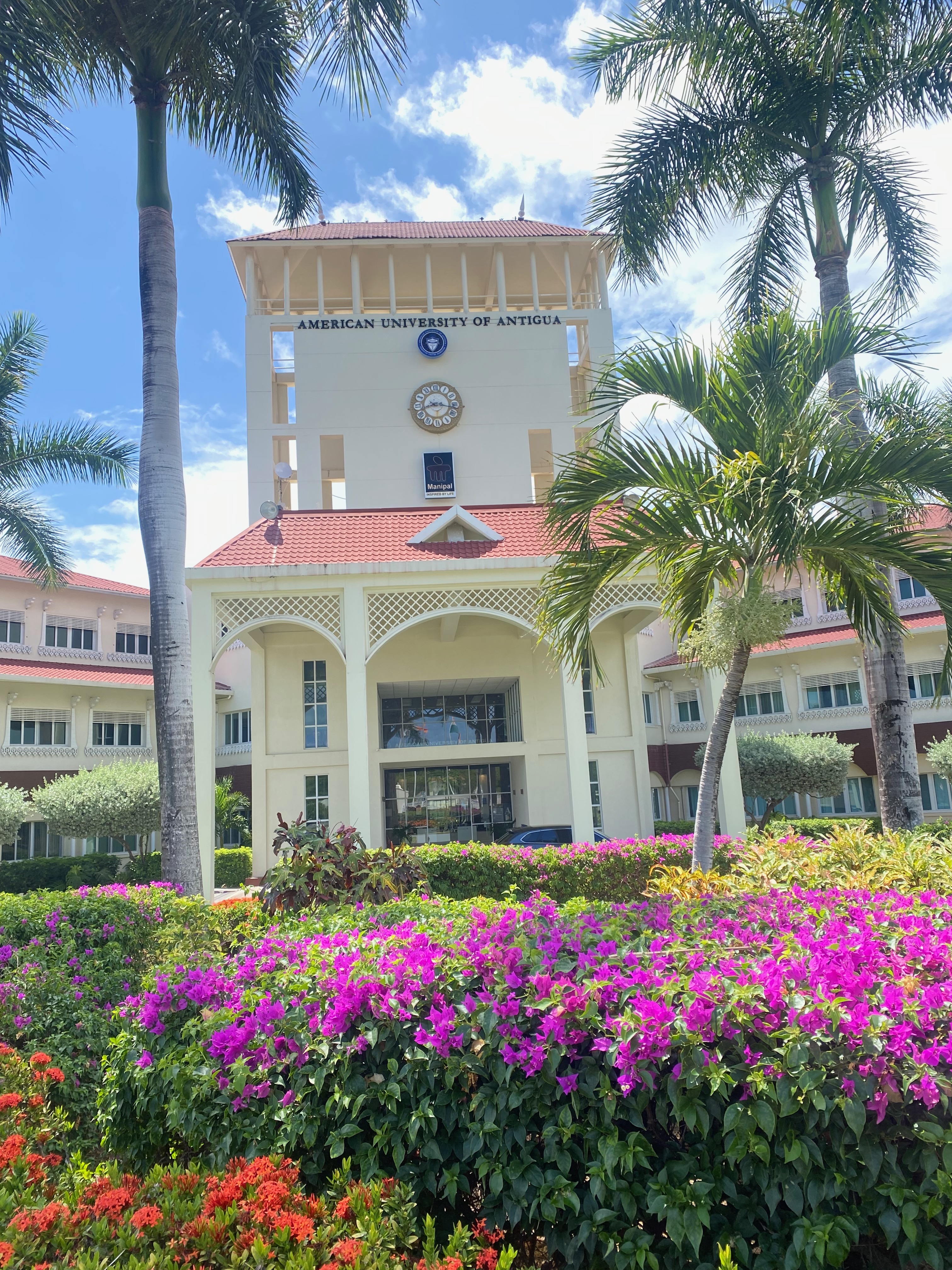
Showing posts with label faith. Show all posts

Saturday, June 29, 2024

A Broke Medical Student's Life: Surviving a Semester with £300

This chapter might be the hardest one to write. I am not sure how to begin. I guess because for almost anybody who you speak to and they find out that you're in medical school, they'd prolly immediately assume you're rich or well off. But as we all know that is entirely not the case for me.

Ever since the first semester in medical school, I believe that I probably am the poorest student in my school. And I still genuinely believe that. I didn't care what other people think though, all I care about is that I am one step closer to making my medical dream come true.

And so I went to embark on the most expensive and likely the hardest journey of my life - medical school with no money.

Let's lay it all down. I have just about £10k worth of savings in my bank when I started which is being used up to pay for the interest of the student loans that I take out per semester as well as the monthly costs of living (i.e. rent, food, groceries, transportation, school stuff, phone bill, etc). As I mentioned, 75% of the tuition fee is covered by the student loan and the remaining 25% I have to pay out of pocket which I get from my earnings by working as an occupational therapist (OT) in the UK during term breaks. Still - it's just about enough, so my family (mainly my parents and boyfriend) have been helping out by lending me money to fill the small gaps.

With this system, I made it through 3 semesters in medical school until I had to undergo this operation over the summer break and that's when my funds certainly won't be enough to cover the 25% TF plus monthly living costs.

The following are roughly the costs that I have while studying in AUA:

- Tuition Fee: ~$16 to 17k US

- Monthly repayment of loan interest: $75 US (per loan - now $225 US per month)

- Monthly bills (rent, phone bill): ~$800 US

- Transportation: $450 US

- Food and allowance (miscellaneous expenses): £300

For three semesters, all I ever use up in the island is £300.

Yes, you read that right - three hundred Great British pounds which is roughly 990 Eastern Carribean Dollars. How?

First of all, I don't spend anything almost everyday whilst on campus.

Chicken Adobo dinner with rice and tomato salad

I don't buy food or drinks. I have my water bottle which I fill for free from the school's drinking fountains. I bring my own yet cheap coffee at home and that sustains me for the whole day. Although I do bring sachets of 3-in-1 coffee which I use only on those rare occasions when I feel I need to top up my energy.

I meal prep. once or twice a fortnight and those 2-3 meals that I make (mostly Filipino dishes) last me at least a month. Yes, a month. I alternate the meals or sometimes, when it's my favourite dish, I even eat the same thing for at least a week.

Homemade Tuna Patties

For example, one Saturday or Sunday, I'd make chicken Adobo, Filipino style spaghetti and stir fry veggies (mainly cabbage) in the morning or at midday after going to the groceries earlier during the day. I'd probably finish cooking around 2 or 3 in the afternoon. After which, I'd rest or eat a late lunch, have a shower and then study for the rest of the day until midnight.

I don't usually have breakfast - just coffee. So I'd pack a small portion of the dish (normally with rice) in a container for lunch and dinner. Let's say, I'd have chicken adobo plus rice and spaghetti one day, and then spaghetti and stir fry veggies plus rice the following day. I'd just switch up the combinations of the three meals for one or two weeks or until I finish everything.
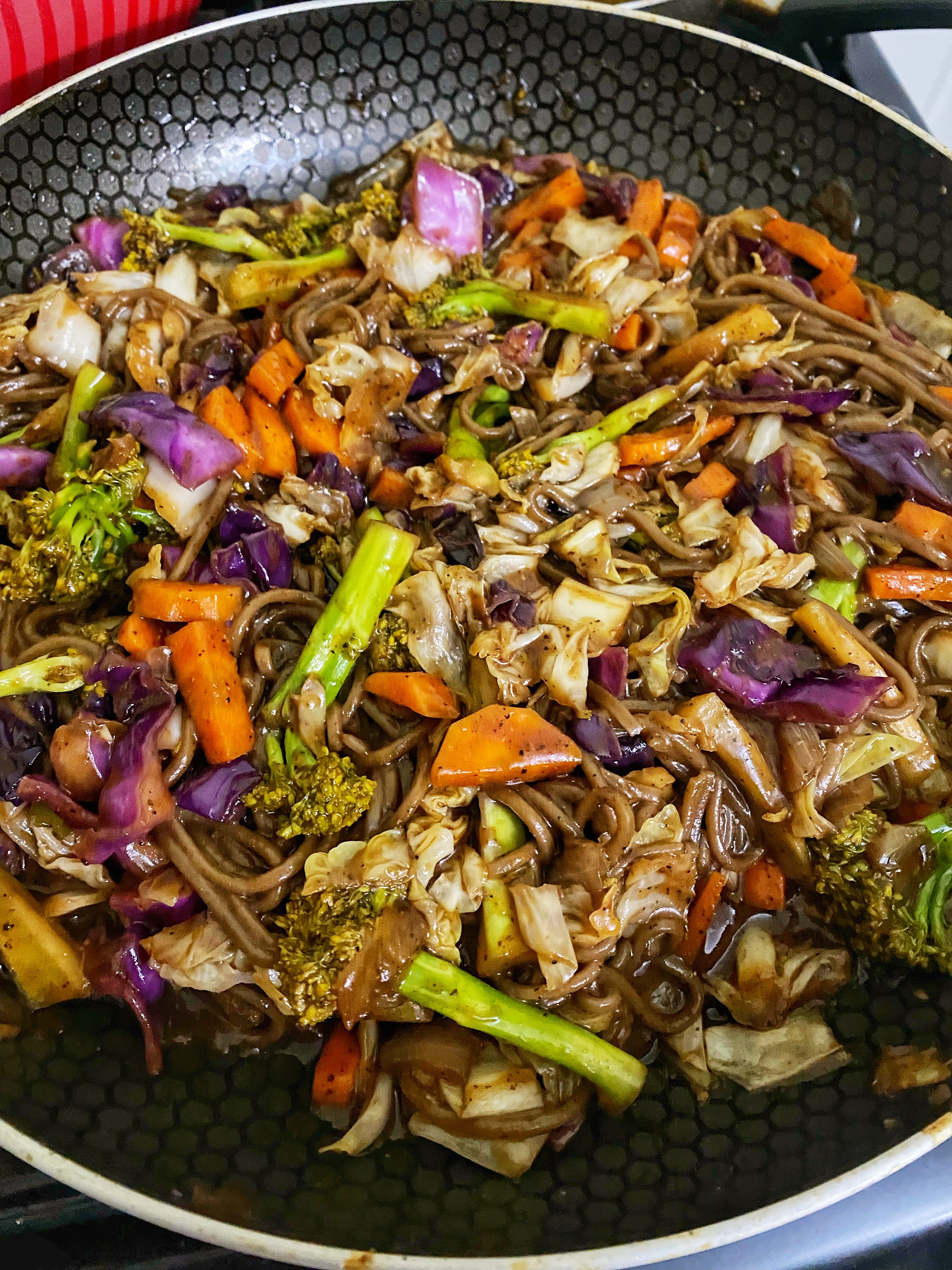
Stir fry noodles with veggies

I usually cook meals that have the least amount of ingredients, the least amount of time and complexity needed for cooking, and those meals that can last long in the fridge. Adobo is the best example of such meal - it is very easy to make, tastes fantastic (but more like home) and has very few and cheap ingredients!

Filipino style spaghetti (top) and Pork giniling (bottom)

Vegetables, fruits and seafood are a luxury in the island, as well as all other proteins apart from chicken. 

But to be honest basically everything is expensive!

My staples are chicken, rice, potatoes, cabbage and noodles/pasta. I hardly eat fruits apart from cucumber (and free mangoes during their season) and veggies apart from those I mentioned because I'd rather not spend ridiculous amount of money to buy items when they rot/spoil too easily and quickly even though they're in the fridge. The technique is to cook them as soon as possible, otherwise, you close the fridge and they'd have wilted the morning after.

Sinampalukang Chicken (in tamarind/sour base soup)
I love green mango!

We're not too sure why - but my best guess is because almost everything is imported by the island.

Every time I come back to the island, my 23kg of check in luggage is just filled with food that will help to sustain me the whole semester. I also bring school stuff and other student essentials with me because I'd rather not buy ridiculously overpriced but sub-standard items sold in the island. And since I don't get to eat much vegetables and fruits, I bring 2 types of vitamins/supplements with me, and so far for three semesters, with the grace of the Lord, I've never been sick whilst on the island.

Homemade pulled BBQ chicken bao (bun bought from UK M&S)

For most AUA students, every school gathering with free food and drinks is a totally complete bonus especially if we get to take home food with us - for example, just a simple general body meeting of a club with free pizza and you get to take home 3 slices, we're looking at hassle-free breakfast for 3 days - well, at least for me because I (i.e. my tummy) am not a fussy eater. Literally, I am not maarte (stagy/fussy).

Free food and drinks from a GB assembly

During the 3rd semester, I also started to go to the school pantry to get free food at least once a week during the latter part of the semester when my monies really did start to dwindle.

The school's food pantry is a huge blessing to be honest - I definitely see myself maximising this come MED4.

For transportation, during the 1st semester, I was automatically enrolled into the school bus so I used that daily for the whole term to take me between home and campus but only on a set bus schedule. And if you missed the bus - for example, you we're not on the bus stop by the time it passed, you'd have to walk 15 minutes to the campus under the sweltering heat of the sun. But most times, going home from campus, you'd be home late because the bus drivers would wait ~15 minutes for the students to come and then depending on where you live (i.e. where your housing is located in the bus route), they'd have to drop off students to other housing first before you. So during that time, it takes about 30 minutes for me to get home even though my apartment is only a 5 minute drive from campus. 

For the succeeding 2 semesters, I availed of a taxi service worth $450 US for the whole term and this takes me to/from school on my preferred time slots daily except Saturdays (2nd term) or Sundays (3rd term) and bank holidays. During such days, I walk to/from school if I don't get a friend or another student to kindly pick me up or drop me off from or to home.

During the 2nd and 3rd semesters, my service also gives me at least one grocery run so I didn't have to rely on a friend/classmate for a ride to such when they are going.

I don't go out for drinks or snacks or food like most of my classmates. When I do go out, I'd pick the cheapest but most sustainable item/s on the menu. I didn't really care or for me it didn't matter.

Tried the unlimited wings after a major exam

I'm more than happy to endure a basic and simple life for 4-5 months as long as I pass and finish the semester strong.

For fitness and exercise: either I jog/run around campus or within the vicinity of the campus/housing or I go to the school gym about 2-3x per week which is free for students - although the facilities aren't so great (i.e. they have basic equipment but it will do) so I don't have to pay for a membership fee.

For MED1 and MED2, I have to stay at school for as long as possible so I don't have to use up electricity at home which I'd have to pay on top of the rental fee. So I normally am at school from 8AM to 9 or 10PM. I didn't use the AC as much as like most of my classmates. I only turn it on for 15 to 20 minutes max at night before I sleep just to make the room cold enough. Luckily, I have been blessed with the gift of falling asleep quickly, so it was never a problem for me.

For MED3, electricity was already included in the rental fee - so I didn't have to suffer the heat that much anymore because I can use the AC whenever and for as long as I wanted to. I do my laundry for free over at a good friend's apartment who lives on the next street once a month (for MED3). During MED1, I had to pay $20 US once a month, and during MED2, it was included in the rent.

The miscellaneous fees were just club fees which were normally around $20-25 US, or on instances of needing to buy one or more household items. Rarely after a major examination, I'd treat myself to something small but worthwhile like maybe 3 pieces of fried chicken from Epicurean or an order of fries from the cafeteria. Most times, I have a few true friends who treat me.

Free Dinner!

Every semester in Antigua, I live as a medical student with the tightest budget one could ever imagine. I don't spend any penny unless I absolutely have or need to.

It is hard don't get me wrong. Never in my wildest dreams would I ever imagine that I'd be living in the simplest and most basic way possible. It's a good thing I have already lived through financial struggles whilst growing up as a Southeast Asian kid in a developing country. It didn't bother me as much.

I am but ever grateful to Him that makes everything possible. At least once or twice a month, when I'm about to run out of food, He'd make a way (e.g. suddenly an event will happen at school and I'd end up with free food for the whole week).

And as I near my surgery, days are dwindling down. I only have roughly 2 weeks during which I can work as an OT and that won't even cover the rent for the whole semester. Each day that passes by makes me more and more anxious. And so everyday becomes a test of faith - it is so hard to believe when everything just feels like it's an uphill battle and with every move you make, you just can't seem to win.

Praying the Rosary with Catholic club members on Fridays

In my life, never have I been this close to God and been tightly held on to my faith. I honestly don't know how I'm going to pay for all the fees and expenses this coming MED4. But if there's anything I've learned (the hardest way) while in medical school, all I can ever do is have peace in knowing that He is in control and that He will make way.

He provides - all you need to do is believe.

Campus Pond


Saturday, June 15, 2024

What A Broke Medical Student Looks Like: Time Management at its finest and God's Grace

The main purpose of this blog is to help paint a picture of my experience so far having been in medical school for three semesters. I can confirm that the major force that has gotten me throughout this is my faith in God. For every non-believer, I could actually attest that my whole life is a testimonial of God's greatness. He has carried me through every single hurdle. And I owe everything to Him.

I am here because of Him.

And for all honesty, as cliche as it sounds, the 2 reasons I originally had as to why I had this dream in the first place are no longer the main reasons why I am doing this. My experience as an occupational therapist both in the Philippines and more so in the UK has become the main fuel or drive to become a doctor.

I just feel it in my bones that I was born to become one; that I can help more and do more if I become one. 

I'm not doing it for the money or the fame - I could've gone to other professions to get those. I am doing this because I want to be an instrument of His healing ; so I can help other people. Trust me, I would never have put myself into this self-imposed grueling hardship if I didn't genuinely want this. I have put my entire life on hold because of this dream. I wouldn't even wish this kind of hardship on my worst enemies - also cause I don't think they'd be able to handle it. (wink wink) 

As a skint medical student in a foreign island, I have 3 main priorities on the top of my list: meeting my most basic physiological needs (includes being 'healthy'), efficient management of  money  (for paying the rent, food, basic essentials like toiletries, household items, school supplies, etc) and  time , and studying.

Cupcakes baked by my first med. friend

Those were the only things that greatly mattered while I was in Antigua and literally nothing else especially during my first semester. I decided that I would solely focus on studying and make sure I pass before I allowed myself to do anything else. It was also the time to test the waters - see how hard studying medicine is, the style of teaching of the professors, the 'school' environment, my fellow students, etc. I was still establishing my routine and was trying to get back to the full on 'student mode' and switch from a professional who's already worked a significant amount of time. Also - I feel I'm no longer in the 'top shape' for studying compared to when I was younger. So let's say everything else became 'sub-important' or got filed under the 'worry or think about it later.' And those were like my family/relatives/BF (plus all the drama attached), friendship, non-school-related/extra-curricular activities (eg clubs, school politics, etc), news, etc.

I was like a horse with blinders - always just looking forward towards the goal: finish medical school in one go and as quickly as possible. I literally cannot afford to fail - I told myself that if I fail in any form or way, then that's the end of the line for me.

And so for me, coming to Antigua to chase my medical career dream means FAILURE IS AND WILL NEVER BE AN OPTION .

Hence, I studied everyday of the week. You can only find me in four places when I'm in Antigua: my apartment, on school/campus daily (about 90% of the time in the level three library commons or in a classroom when attending live lecture), the grocery store ( at least once a month mostly to do food-shopping), and the Catholic church (on Sundays when I get a ride/transportation).

Holy Family Cathedral

I've established a routine that manages my time so well so it's balanced between meeting my most basic physiological needs and studying. I've stuck to this routine which has indeed changed a little bit over the three semesters. But medical school is really damn hard. There's always too much content that needs to be covered over the shortest amount of time. After just the first semester, I have acquired a deeper understanding and a different level of respect and admiration for all medical doctors in the world.

What follows is what a typical day of 'MED1 Me' looks like.

My day starts at 6AM. I get up, drink my anti-HTN medications and vitamins, and prepare my ' baon ' (coffee and food for lunch, snacks, and dinner) into my lunch bag while talking to my parents (or to my BF when he is on a late shift at work) in FB messenger. I have been automatically enrolled into the school bus service which has specific pick up times to/from the school housing which meant that if I missed the bus, then I'd have to walk to campus or back home. So for the following semesters, I availed of a taxi service for $450 US (same fee for the school bus) for the whole semester and that takes me to and from school everyday (except on Sundays) on times that I want and it includes one grocery run per week. I walk to and from school on Sundays if I don't get a ride home or sometimes, when I do get transportation to go to the 7AM Sunday mass, I get to have a ride to campus after that too.

AUA COM Main Building

I'm already on campus before 8AM. I refill my water bottle in the water fountain and then settle in my usual table in level 3 (L3) library commons. I found that I cannot study in the quiet rooms (where you're not allowed to talk let alone breathe) but I get to concentrate more in a loud environment like L3. In L3, I can also eat and video call my parents/siblings/BF on FB messenger. Most of the time, they just watch me or are just in the background while I study.

AUA Campus

I study in L3 until 8 in the evening. For me, a "break" means doing ANYTHING ELSE apart from studying. So I don't really have a lot of breaks. My only breaks are reserved only for 'verbs' that are for meeting physiological needs like eating (ie lunch sometime between 1-3PM and dinner sometime between 6-9PM), toileting/personal hygiene, etc or going to church/hearing online mass. I do have occasional 'snacks' but I don't take a break from studying. Also from time to time in the library, some people will come by and have a chat but I try to minimize this as much as possible.

As I also try to maintain 'being healthy' which for me equates to 'not getting sick while studying,' I make sure I have some exercise during the week. My goal has been to go to the free school gym for at least an hour 3x (MWF) a week. When I do manage to force myself to go, because sometimes laziness wins and I justify it further with 'I still have a lot of studying to do,' I go between 6-8PM. With God's mercy and grace, I have never been sick for the past 3 semesters - alleluia!

When I get home from school, I tidy up my bag (wash lunch box contents) and if I didn't have my dinner at school (usually on days I go to the gym), then I'll have dinner while talking to my parents and my younger brother in Canada on FB messenger. After that, I have a short break to shower and go back to studying usually from past 10 until 12 midnight. Then I go to sleep. And the cycle repeats after 6 hours.

At least one Saturday a month, I'd go with one of my classmates-turned-friend who has a car to the grocery store early in the morning and then I meal-prep by cooking 2-3 meals which will last me a good 3 weeks. Then on Sundays, if I get a ride with a friend, I go to the cathedral for mass. But most Sundays, I just have to resort to watching online mass in YouTube either by Manila Cathedral or Quiapo Church. I almost always end up crying after receiving the body of Christ and I pray for Him to grant me the strength and wisdom to make it through this journey.

That was my routine. I never missed a live lecture class - either online or in person. Always on a Friday night, during the 5-7 minute ride home, I imagine how I would relax and take a break by watching an episode of MasterChef, just simply playing Boggle or checking social media on my phone. But the minute I get home, I do my routine and all thoughts of 'relaxation' go out the window. I said I'd just reward myself after the work is done. And I just don't want things simply 'to be done', they'd have to be 'done well.'

There is no rest for the wicked.

And that routine paid off and keeps paying off because for the 1st two semesters, I'm proud to say that I was part of the Dean's Honor Roll which is the top percentage of the whole batch. I never cared what other students got on every exam or quiz or assessment - myself was my only competition. I strived to be better than myself from the day before as much as I could. For all those who can relate:

I was Taguro (from the anime Yu Yu Hakusho aka Ghost Fighter).

I'm giving it my 1000%. Like I said,  I absolutely cannot fail . 

Tuesday, August 13, 2013

Post-Mortem:Post Boards

Taking the board exams is perhaps the culminating event for all courses that have one.

At one glance, people can easily and carelessly think or say things like "it's just another exam" or "you've been studying that for years, how hard can it be?" But in reality, or in the reality of those who have taken or will take the board exams, that's not entirely the case.


THE DIFFERENCE
Yes, inside the comforts of our classrooms, we do take exams much like that of the boards regards the purpose: to test us how much we have learned and understood, and how prepared we are to practice our chosen professions. But in real life, there is a world of difference between those exams that we take inside the classroom and the board exams.

For one, preparing for an ordinary exam is very different from if you're preparing for the boards. But more than the preparation, the main difference would have to be the weight of the consequence/s of the results of the board exams. In taking such exams inside the classroom, we have much more confidence than while we are taking the boards. This is because we have that "safety net" mentality; in which when we fail an exam in school, the gravity of the consequences of failing do not bear much weight as compared to when you fail the board exams. It follows that having such mentality, we believe that "we can always try again next quiz/exam" or that "we still have the removals, etc." as compared to failing the boards, you would have to repeat the long arduous months of preparation, of literally, sleepless nights, 24/7 experience of anxiety, and the feeling that your hormones are in overdrive, making you hypersensitive to any stimuli.


BOARDS:BIG
The BOARDS is a big word, and I mean it literally and metaphorically speaking. It is so big, just one month with it will bring about change/s in you in ways you can only imagine. The phrase, "make or break" applies; It can indeed make you a better person or it can break you inside-out. There are no gray areas; during the preparation, you'll be able to understand yourself more as well as the people around you.


THE CHANGES
The board exams is an agent of change: it will bring about a whole new you physically, mentally, emotionally and spiritually.
Physically
During the months of preparation, it is indeed advisable that an examinee discover and establish a routine and a diet which would make him/her be at his/her most functioning capacity. A physically healthy mind and body is a necessity that one has to acquire and or maintain at least until the moment that you pass your last exam questionnaire and answer key to the proctor.

Eating the right foods is essential. I know you're thinking, "hell, I'm overworking myself, I should at least be able to eat anything that I want!" That's true, we people tend to overeat or retreat to comfort foods when we're stressed. But as the first sentence of this paragraph entails, it is essential and more advisable that even if we do eat a lot, we should at least 'eat right'.

The diet should include less carbs, and more food for the brains!
Bear with me as I describe some mechanisms or technicalities to help you understand why you should eat right during the boards season. According to studies, diets with high levels of carbohydrates have a negative effect on our level of consciousness. Dietary carbohydrate intake has been shown to increase the plasma concentration of tryptophan, a precursor of serotonin and sleep-inducing agent (Afaghi, et. al., 2007). Serotonin is an agent of the brain which induces a calm or relax state. It was found that meals with high levels of carbohydrates help to shorten the onset of sleep and thus, helps to induce sleep faster. Carbohydrates are generally thought of as good sources of energy since it readily converts glucose into energy. However, it is a double-edged blade, since not only do carbs have the least amount of energy stores, but high levels of carbohydrates function to increase insulin production of the body. The increased insulin would then result to a decrease in glucose levels in the blood, thus, less glucose can be converted into energy and excess carbs would only be stored as fat. This is certainly not what a board taker who will have to stay up all night to review every night would want to happen for a duration of three or more months.

A diet rich in brain foods is highly advisable. Brain foods include those with low glycemic index such as whole grains (e.g. brown cereals, wheat bran, whole grain bread), high levels of omega-3 fats (e.g. soya bean oil, and oily fishes such as tuna, salmon and sardines), lycopene and antioxidants which help to improve memory (e.g. tomatoes, blueberries, nuts), and vitamins, specifically, vitamin B12, which is known as the vitamin for the nerves. The fatty acids that can be derived from omega-3 help to strengthen synapses within the brain, thus helping to sharpen memory. While antioxidants regulate oxidative stress, which destroys brain cells. This stress is a result of the body's metabolism (i.e. conversion of glucose to energy, resulting to the release of free radicals in the body). Antioxidants block these free radicals from entering and accumulating in the brain. So, it means to say that it won't hurt to eat a handful of nuts and drink a cup of tea for your snack when you're feeling hungry than binging on an order or 2 of fast food.

I know it might sound impossible, but trying to squeeze in a few minutes of exercise, maybe 2 to 3 times a week, into your schedule is also advisable. Exercise helps release our body's endogenous "feel good" hormones, our endorphins, which would indeed help us feel more relaxed and focused on studying. Not to mention, since anxiety is probably taking its toll on your body, you might start to realize that you're being constipated as a result. Exercise helps to increase metabolism and improve digestion. Thus, by exercising, you hit three birds with one stone: physical fitness, relief of anxiety and a more sound mind and body for studying.

In my three months of review, all of us, maybe, except for one friend of mine who was dieting during our review, gained a few pounds or so. It may be attributable to the combination of stress, lack of exercise and improper diet. There even came a time when the saying, "you gained some," became ordinary to hear. So I suggest, if you would like to maintain a fit body, follow the two tips aforementioned.

Mentally
Mentally, there would come a time during the review when you feel like you can no longer take in any bit of information; like if you could describe your brains' memory capacity, it feels as if it is critically running low. So another tip for the boards is that you have to be able to choose to study only those that are deemed necessary --- or as they call it, only those that are "boards sensitive."

Remember: You can't know everything, and, you don't have to.

The board exams may get as factual as the Guinness book of world records, but let's face it, your brain cells can only store as much, unless you've started memorizing all of your books (in my case, physical medicine and rehabilitation books such as De Lisa, O'Sullivan, and Braddom), not to mention your notes and handouts, since your first day in college. But by then, come board exams, you'll be too knowledgeable that even the most basic and the simplest of questions would rattle you out.

Yes, the board exams may sometimes seem like a quiz bee; with questions seemingly taken from the moon. But that doesn't in itself mean that you have to know everything that's ever written. Perhaps, let me rephrase it --- you need only know those that are essential. Take into consideration the different kinds of information: (let's use this example to better illustrate the differences of each information --- taking a medicine/drug for diabetes mellitus type 1) 

3. Nice to Know: these are pieces of information that you may or may not know because they are too factual or sometimes too 'specific'/'technical'. You may read it for leisure, but you don't really have to digest the information. For example (refer to the aforementioned situation), in my case, in occupational therapy, you need not know the exact details as to the chemical reactions when one drug is administered in the body, i.e. how a molecule complex binds to a specific alpha blah blah receptor and cleaves 2 molecules of ATP blah blah. But you may want to know number 2.

2. OK to Know: these are chunks of information that are related to those topics that you need to know by heart. In other words, these are supplemental information on the main topics of your course. For example, if I were studying the physiology of drug metabolism (in relation to number 3), I'd have to know where administered drugs are metabolized (i.e. liver - the specific part of the body that metabolizes the drug orally administered so that it may be transformed into a form that may be absorbed by the body so that it will be able to exert its effect), but I need not know "how much mole of energy, or kcal of something is needed to break away a molecule of something to attach to something to move from the plasma to the liver and back, and etc" --- that's information number 3. Get what I mean? But what you really should know is number 1.

1. Must Know: these are the bulks of information that one should be armed with before taking any exam. Most of the time, it consists of the basic principles or the essentials that form the foundations of each practice. For example, it is a must that therapists be knowledgeable on the effects, precautions and major side-effects of drugs administered to patients with DM 1 so that therapists are guided on their decision making regards the intervention that they would provide, as well as to the actions that they would take to prevent or alleviate such adverse side effects during therapy sessions.

See the difference? Take into mind these three kinds of information so as to conserve brain cells, and to not let precious memory space go to waste. Some lecturers would not advise this technique, i.e. "choosing" topics. But this is the reality of the board exams, with too little time and memory capacity,  and too much information to read, sometimes, we've no choice but to choose.
And if the time comes that you really do have to choose, I say, 'choose intelligibly'.


Choosing intelligibly simply means that you don't just disregard a topic because it's hard to understand or because it's too complex; sometimes, that's actually where you really have to focus. Choosing intelligibly means that you choose the topics based on those that have recently surfaced as questions/topics on the previous board exams --- and that's how it becomes 'boards sensitive.' 

So, you see, it's not just during elections when you can get to say, "choose wisely!"

Emotionally
If you have friends, and you decided to stay in one apartment during the review season, I suggest that each and every one of you keep in mind that during the preparation for the boards, everyone is high on hormones.

Meaning to say, it should be the responsibility of each and every one of you to ALWAYS, and I really mean, ALWAYS be sensitive and understanding. It is because there are only 2 seasons in a person's life (or only 1 if you're a male) in which his/her hormones are in overdrive: one is during pregnancy, and the other is during the boards season. Yes, think of it as if you are all pregnant. This can only mean one thing --- HYPERSENSITIVITY.

Talking from experience, this hypersensitivity has 2 roads.

1. Nega-Hypersensitive: super sensitive in a way that even the tiniest or minutest detail can make a person cry, laugh, or feel only-God-knows-what for reasons only-God-knows-why. As I've been emphasizing since the beginning of this article, the board exams is an agent of change, it may make your friendship stronger than ever, and or it can help you make new connections even with those you least expect. But, just like every continuum, it has a down side, the boards can also break bonds. It is sad that during this time, friends may turn on each other only because of even the tiniest and pettiest of misunderstandings. So I suggest that you be number 2...

2. Positive-Hypersensitive: super sensitive in a way that you try to notice the slightest change in mood or the minutest response to an action or conversation --- or notice just ANY REACTION/RESPONSE to anything at all and then, be understanding. For you may never know, that simple "ok" response to a joke you usually say to each other may have actually meant, "f*** you." And this could go on and on, until it accumulates, and keep on accumulating... until one day it blows up in all of your faces.
As much as possible, try not to spark ANY fire. You would never, in your wildest dreams, want ANY kind of drama during the boards. The boards is enough drama as it is.
So be hypersensitive - positively!

Spiritually
Of course, in every battle, one must always be armed with this one thing --- FAITH.
Faith is taking the first step forward even if one doesn't see the staircase.
One cannot go into battle without faith. During this season, all kinds of your energy may be drained, but never should your faith in God be drained. For in the end, this is the only weapon that we have. We may have the best teachers, the best review center, the best reviewers, all the comfort foods, the best study place and buddies, etc, but if it is not the will of God, we will fail the board exams. In the end, it is only our faith in Him that would suffice. Atheists wouldn't understand, they'd say that we write our own destinies. Yes, that's true. But it is still in His hands in which we try to write. And when Thy hands move, the only thing that we can do is to follow.

The boards is not just a season of studying from sunrise until sunset. It is also a season of prayer and faith. For it is already but a blessing that your body did not fall ill during the review, or that you have family and friends who support you, or that you are enrolled in a review center where they teach you songs, and techniques; every blessing should be noted and thanked for.

There is a saying, which I think every student should know even for at least once in their life, and it goes like this:


Faith should not be equated to fear. It is okay to feel anxious and nervous before the boards. But one should not fear. We may not know what the future holds, but knowing Who holds the future makes a great difference. So study hard, but pray harder!

During my time, we dedicated one day to visit different churches where we said our little prayers of hope, wrote short petitions for our families and for our future, and lit candles asking for His light. Some of the churches we visited were Quiapo and Baclaran churches, St. Jude at Mendiola's Place, St. Therese in Mayon St., one church in Legarda, St. Claire near LRT Katipunan station, and Our Lady of Good Voyage in Antipolo. We even had a pilgrimage to visit Our Lady of Manaoag in Pangasinan after the board exams. One can also pray novenas such as that of St. Jude or Padre Pio's. One need not have a hard copy, for I didn't. I only searched the net. I found one site that has many prayers for the board taker. You may check it by clicking the link.


So you see, the board exams season is no season to be taken lightly. It is not only just a key to being able to practice your chosen profession, but also a means to be able to achieve a sense of fulfillment. For passing the boards with a national passing rate of 40% is really something, and it means a lot not only to you but most importantly, to your parents or to whomever supported you and your studies for God knows how many long years. This blog cannot even do justice to the weight of the boards. So for every board taker out there, I salute you.
At the moment, passing the boards may feel like it's your everything, but try to bear in mind, that this is not who you are. It is merely but a part of you.
After you have understood this, I hope that you'll feel better and that it eases your anxiety even for a bit. Because that is the reality, passing the boards is a huge blessing, even bigger if you topped it. But failing it doesn't mean it's the end of the world. We may not understand 'why?' now, but someday, we will. For if there is something I've learned about failing, it's that it helps us to learn how to pick ourselves up and rise again --- Life, after all, isn't failure-free.


'Til my next nobelablog, xo

-KESO, OTRP


References:
Afaghi, A. et. al. (2007). High glycemic-index carbohydrate meals shorten sleep onset. The American Journal of Clinical Nutrition, vol. 85; pp. 426-430.
http://www.bbcgoodfood.com/howto/guide/10-foods-boost-your-brainpower
 

Template by Best Web Hosting